
A lot of home workouts get abandoned for reasons that have nothing to do with laziness. The space feels off. The routine asks too much. The workout sounds good in theory, but it sits untouched for four days because the whole thing feels harder to start than it should.
That is usually the real problem. Not effort. Not discipline. Just too much friction.
A home fitness ritual that actually lasts tends to feel different. It has some structure, but it does not feel rigid. It looks put together, but not overdone. Most of all, it fits into everyday life without turning into another draining task on the list.
Why The “Perfect Setup” Often Fails
People often assume the answer is better gear or a stricter plan. Sometimes it helps, but not in the way most people think. A beautiful setup still gets ignored if the routine around it feels heavy. A detailed training plan still falls apart if it has no room for tired days, busy evenings, or plain old resistance.
This happens a lot with home fitness. The setup starts as a fantasy version of life. Calm mornings. Extra time. High energy. Then normal life walks back in, and the whole plan suddenly feels unrealistic.
That is why so many routines start strong and quietly disappear. They were built for an ideal week, not a real one.
Start With The Atmosphere
Boutique fitness is not just about the workout itself. It is also about the feeling around it. The room feels clean. The session has a rhythm. There is a sense that this part of the day has a purpose.
You do not need a full home gym to create that feeling. Sometimes it comes down to a small corner that stays clear, a mat that is already there, or lighting that makes the space feel calmer instead of clinical. Even simple details can make the workout feel less like a task you have to set up and more like something that already has a place in the day.
Keep The Room Light
One thing that makes a home workout space feel expensive is not the amount of equipment. It is the lack of clutter. Too much gear makes the room feel stressful. It also creates visual noise, which quietly makes the workout feel bigger than it is.
A better approach is to keep the space edited. One main machine or method. A few useful extras. Enough room to move without bumping into things. That usually feels far more elevated than trying to recreate an entire studio.
It also makes the ritual feel cleaner. There is less decision-making, less mess, and less chance that the setup starts collecting dust because it looks overwhelming.
Choose A Style That Feels Strong, Not Punishing
This part matters more than people expect. The best home routine is rarely the one that feels the most extreme. It is the one that feels satisfying enough to come back to.
That is why low-impact, high-resistance training keeps getting more attention. It can feel intense, but not chaotic. It can challenge the body without leaving the whole room feeling like a bootcamp zone.
For people who want a workout that feels polished rather than punishing, that makes a difference, and research on Pilates benefits also links Pilates-based training with gains in muscular endurance and flexibility.
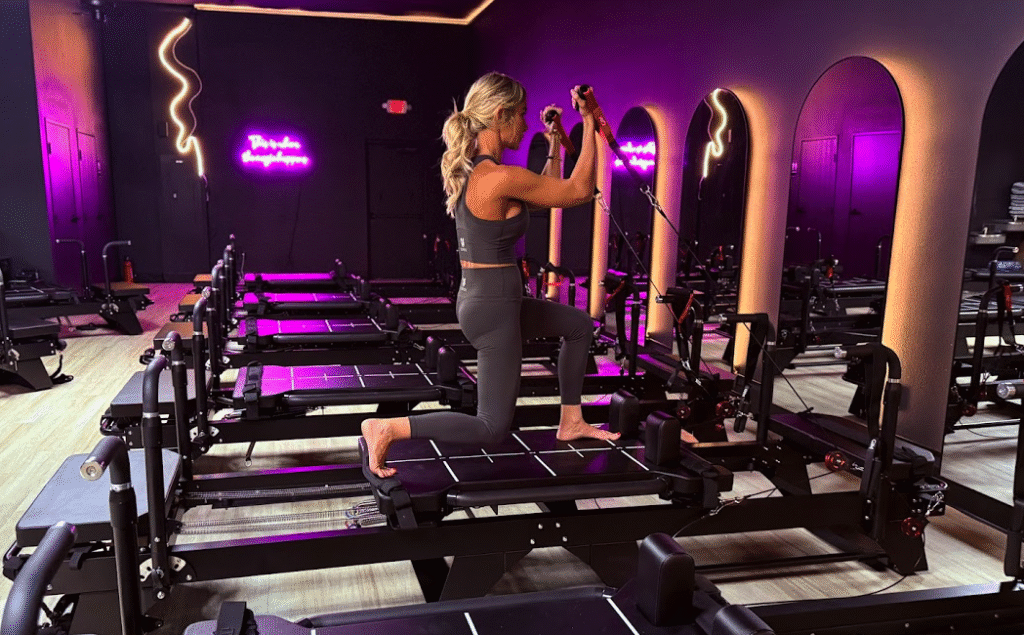
Reformer-style training fits that mood especially well. It combines resistance, core work, and control in one format, and it tends to feel more intentional than a random mix of dumbbells and floor circuits.
For readers comparing a home lagree reformer machine option, Sculptformer sits in that high-intensity reformer-style category. It makes sense for people who want that deeper, studio-style burn at home without building a loud or overly complicated gym setup around it.
Give Each Workout A Personality
One reason boutique classes feel easier to follow is that each one knows what it is doing. A strength session feels like strength. A conditioning session feels different. A slower, control-based session has its own purpose, too.
That same idea works beautifully at home. Instead of making every workout do everything, let each one have a role. One can focus on lower-body strength. One can be more core-led. One can push the pace a little. Suddenly, the week feels clearer.
That gives the week enough variety to stay interesting, but not so much variety that it starts feeling chaotic. The NHS activity guideline also supports combining aerobic activity with muscle-strengthening work across the week.
Make Starting Feel Effortless
The first few minutes decide a lot. If beginning the workout feels annoying, the brain notices. That is why people benefit from removing every tiny obstacle they can.
A few things help:
- Keep the setup visible
- Choose a time that already fits the day
- Use a simple structure
- Have a shorter backup session for low-energy days
None of that sounds glamorous. It works anyway.
A ritual lasts when it is easy to re-enter. That matters much more than having the most ambitious plan in the room.
Let Progress Look A Bit Quieter
One reason people lose interest is that they expect progress to feel dramatic. In reality, it often arrives in a less obvious way. Better posture. Cleaner movement. More control. A session that used to feel awkward starts to feel smooth. Those changes are real, even if they do not scream for attention.
That kind of progress is often better for a home ritual anyway. It feels steadier. Less chaotic. More grown-up, in a way. Instead of chasing exhaustion, the workout starts building trust. The body feels stronger, but not beaten up. That is usually the sweet spot.
Final Thoughts
A boutique-style fitness ritual at home lasts when it feels calm, clear, and realistic enough to repeat. It does not need to be complicated. It does not need to look like a showroom. It just needs to feel intentional and easy enough to use on an ordinary day.
That is usually what gives it staying power. Not pressure. Not punishment. Just a setup and rhythm that make movement feel like something to come back to.