
The term “sodziu” is most closely connected with the Lithuanian word sodžius, which means a village or rural settlement and, in some contexts, a traditional rural dwelling or homestead. Although the word looks simple, it has an interesting connection with Lithuania’s rural history, agriculture, settlement patterns, language, and cultural heritage.
For English-speaking readers, understanding sodziu requires looking at both the modern meaning and the historical context of sodžius. The spelling can also cause confusion because Lithuanian uses special letters and grammatical endings. This guide explains the meaning of sodziu, its historical importance, related Lithuanian terms, and why the concept remains useful today.
What Does Sodziu Mean?
“Sodziu” is generally used online as a simplified spelling associated with the Lithuanian word sodžius. The most useful English translations are “village,” “rural settlement,” or, depending on context, a traditional rural community or homestead.
The word has a deeper meaning than simply describing a group of houses in the countryside. Historically, sodžius was connected with rural communities whose lives depended heavily on agriculture and the land around them.
A historical Lithuanian sodžius could include several households, agricultural areas, paths, buildings, and shared community spaces. The settlement was closely connected to the daily work of the people who lived there.
This makes sodžius an important word when studying Lithuanian rural history.
It is also important to understand that “sodziu” is not always the exact standard spelling of the Lithuanian word. The correct form for the village-related noun is sodžius, with the Lithuanian letter “ž.”
For a basic English explanation, however, you can remember:
Sodziu refers to the Lithuanian concept of a village or rural settlement, especially when discussing traditional or historical rural life.
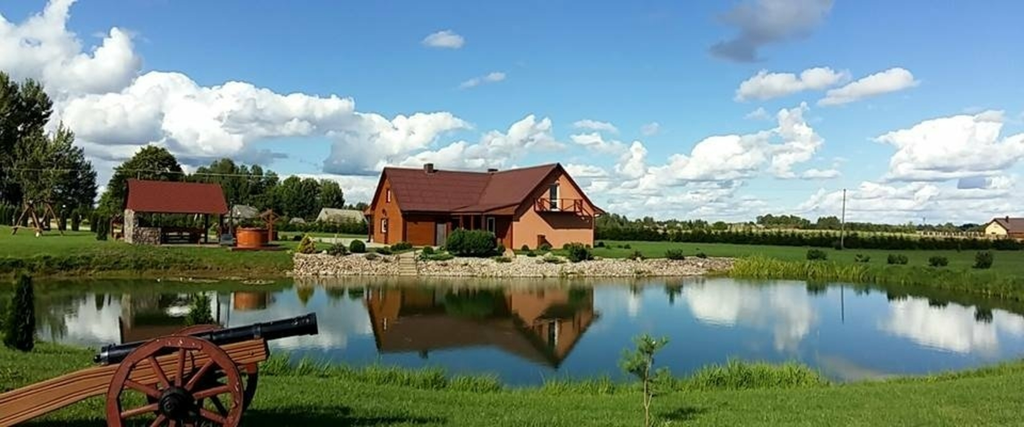
The Historical Meaning of Sodžius in Lithuania
The historical meaning of sodžius is one of the most interesting parts of the subject.
The Visuotinė lietuvių enciklopedija describes sodžius as a type of Lithuanian rural settlement believed to have existed particularly from around the 12th to the 16th centuries. It was associated with rural agricultural communities and the organization of farmsteads.
This means the historical concept should not be understood exactly like every modern village.
Older sodžiai were connected with agricultural communities and could have relatively scattered farmsteads. The settlement structure developed from earlier ways of organizing rural households and agricultural land.
Over time, Lithuania experienced major changes in land organization, population patterns, government administration, and farming systems.
These changes affected the physical structure of villages.
As a result, the historical meaning of sodžius gives researchers a way to understand an earlier stage of Lithuanian settlement history.
The word therefore has both a linguistic and historical value.
Also Read:URLWO: Complete Guide to URL Optimization and Short Links
It tells us not only where people lived but also something about how rural society was organized.
How Sodžius Settlements Developed
Lithuanian rural settlements developed gradually rather than appearing according to one fixed plan.
Before more organized village structures became common, rural households could be distributed across the landscape in different ways. Families needed access to farmland, water, forests, roads, and other natural resources.
As communities grew, households increasingly formed recognizable settlements.
The development of sodžiai was closely connected with agriculture. A settlement needed to support the practical requirements of farming, including access to fields and places for animals, tools, food storage, and household activities.
Historical settlement patterns could therefore look very different from modern American towns.
A modern American village may have houses placed along streets with clearly defined property boundaries. An older Lithuanian rural settlement could have a much stronger relationship with agricultural land and scattered farmsteads.
This difference is important when translating or explaining sodžius to a US audience.
The closest English word may be “village,” but “historical rural settlement” can sometimes communicate the meaning more accurately.
The development of these settlements also demonstrates how geography influences human communities. People built their homes according to the resources and economic systems available to them.
Sodžius, Kaimas, and Sodyba: Key Differences
Several Lithuanian words can be connected with rural life, but they do not mean exactly the same thing.
The three most useful terms to understand are sodžius, kaimas, and sodyba.
Sodžius can refer to a village or rural settlement and has an important historical meaning connected with traditional Lithuanian settlement patterns.
Kaimas is the common Lithuanian word for “village” and is widely used in modern contexts.
Sodyba refers more specifically to a homestead or farmstead. It can describe an individual rural property containing a house and other buildings or land.
A simple way to understand the difference is:
- Sodžius = village or historical rural settlement
- Kaimas = village or rural community
- Sodyba = individual homestead or farmstead
These words can overlap in some contexts, but they should not automatically be treated as synonyms.
For example, one sodyba may be part of a kaimas. A historical sodžius may contain several homesteads.
Understanding this difference makes translations and historical research more accurate.
Agriculture and Daily Life in a Sodžius
Agriculture was central to life in traditional Lithuanian rural communities.
For families living in a sodžius, the land was not simply scenery surrounding their homes. It was a major source of food, income, materials, and security.
People grew crops, cared for animals, maintained buildings, gathered resources, and prepared food according to seasonal cycles.
Daily life was therefore strongly influenced by the agricultural calendar.
Spring brought preparation for planting.
Summer required intensive field and livestock work.
Autumn was a period of harvesting and preparing food and materials for winter.
Winter reduced some outdoor agricultural work but brought its own household responsibilities.
The rhythm of rural life created a close relationship between families and their environment.
This is one reason why the concept of sodžius can be useful when studying traditional Lithuanian culture. It provides a setting in which agriculture, family life, and community relationships can be understood together.
However, it is important not to romanticize this lifestyle.
Traditional farming could be physically difficult and economically uncertain. Poor harvests, severe weather, illness, and limited resources could create serious challenges.
The history of sodžius therefore includes both community strength and hardship.
Traditional Lithuanian Homesteads and Rural Architecture
Traditional Lithuanian rural architecture is another important part of understanding the world associated with sodžius.
A rural homestead, or sodyba, could contain a residential house together with agricultural and storage buildings.
Depending on the period and region, these could include barns, animal shelters, storage structures, workshops, gardens, and other practical buildings.
Wood played an important role in traditional Lithuanian construction, although building styles varied by region and historical period.
Architecture was influenced by climate, available materials, farming practices, family wealth, and local traditions.
This regional diversity is important.
Also Read:PLG Supplies: Complete Guide to Educational and Business Supplies
There was no single architectural design that represented every Lithuanian village.
Instead, rural architecture developed through local experience.
The layout of a homestead also reflected the needs of the household. Buildings had practical purposes and were often arranged to support agricultural work.
For this reason, studying a traditional sodyba can help researchers understand what daily life inside and around a historical sodžius may have looked like.
Community Life and Social Structure
A sodžius was not simply a collection of houses.
It was also a community.
People living in rural settlements depended on relationships with neighbors for many parts of daily life. They could share information, exchange goods, cooperate on difficult tasks, participate in religious or cultural activities, and support one another during important events.
Family was another major part of rural society.
Several generations could have strong connections to the same area, creating a sense of continuity between past and present.
Community traditions could be passed from parents to children through language, stories, celebrations, crafts, food, music, and agricultural knowledge.
This social side helps explain why village terms can have emotional importance even when their basic dictionary meaning is simple.
For someone whose family came from a Lithuanian village, the idea represented by sodžius may be connected with ancestors and family history.
Still, the cultural meaning should be separated from the basic definition.
Sodžius does not literally mean “family,” “tradition,” or “peaceful life.” Those meanings may develop through cultural associations, literature, memories, or personal experiences.
How Land Reforms Changed Lithuanian Villages
Lithuanian villages changed significantly as systems of land ownership and agricultural organization changed.
One major transformation was associated with the Valakų reform, a land reform that reorganized agricultural land and settlement patterns.
According to the Lithuanian encyclopedia, the historical sodžius settlement type disappeared in Aukštaitija during the second half of the 16th century as a result of the Valakų reform. Many settlements were reorganized into more regular street villages.
This was a major change in the physical landscape.
Instead of older, more irregular settlement patterns, some communities developed more organized layouts.
The reform demonstrates an important point about rural history: villages are shaped not only by families and geography but also by political and economic decisions.
When governments change the way land is measured, owned, taxed, or distributed, settlement patterns can change as well.
The history of sodžius is therefore connected with broader developments in Lithuanian political and economic history.
Sodžius and Lithuanian Cultural Heritage
Sodžius is valuable for understanding Lithuanian cultural heritage because rural settlements preserve evidence of earlier ways of living.
Traditional homes, agricultural buildings, landscape patterns, local customs, and village histories can all contribute to cultural heritage.
Rural heritage also helps connect modern Lithuania with earlier generations.
Many traditions that people associate with Lithuanian culture developed within rural communities, including agricultural customs, crafts, folk traditions, food practices, music, and seasonal celebrations.
This does not mean all Lithuanian culture originated in villages.
Lithuania has always had towns and cities as well as rural communities.
Instead, the countryside represents one important part of the country’s cultural development.
Sodžius can therefore be seen as a useful doorway into Lithuanian heritage.
The word encourages us to look at the people and communities behind historical landscapes rather than seeing old villages simply as collections of buildings.
Sodziu for Modern Readers and Genealogy Research
For modern readers, sodziu is most useful as a doorway into Lithuanian language and history.
It can help people understand how rural communities developed and how older settlement patterns influenced Lithuanian cultural landscapes.
For genealogy researchers in the United States, the subject can be even more practical.
Millions of Americans have family connections to European countries, and Lithuanian ancestry can sometimes lead to records containing unfamiliar place names and rural terminology.
A family story might say that an ancestor came from a “village,” while an older Lithuanian record uses a specific word for the settlement or homestead.
Knowing the vocabulary can help researchers ask better questions.
It may also prevent confusion between a village and an individual farmstead.
For example, if a record refers to a sodyba, it may be identifying a household or homestead rather than the name of the entire village.
For serious genealogy research, it is best to keep the original Lithuanian spelling whenever possible and verify historical place names using reliable archival or linguistic sources.
Also Read:Primerem: A Complete Guide to Primary Embedded Memory
Frequently Asked Questions About Sodziu
Is Sodziu an English word?
No. Sodziu is associated with Lithuanian terminology, particularly the word sodžius. The spelling “sodziu” is often used without Lithuanian diacritics in online searches.
What does sodžius mean in simple English?
In simple English, sodžius can be translated as “village” or “rural settlement.” In historical contexts, it can refer to a particular type of Lithuanian rural settlement.
What is the difference between sodžius and sodyba?
Sodžius refers to a village or rural settlement, while sodyba generally refers to an individual homestead or farmstead. A rural settlement can contain multiple homesteads.
Is sodžius the same as kaimas?
They are closely related but not identical in every context. Kaimas is the general Lithuanian word for a village, while sodžius has additional historical and traditional meanings.
Why is sodžius important to Lithuanian history?
Sodžius is important because it is connected with the development of Lithuanian rural settlements, agriculture, land organization, and community life. Historical sources use the term when discussing older forms of Lithuanian village settlement.
Conclusion
Sodziu is best understood through the Lithuanian word sodžius, which is associated with a village or rural settlement and has an important historical connection with traditional Lithuanian rural communities.
Its meaning goes beyond a simple geographic label. Sodžius can open a window into agriculture, family life, settlement patterns, traditional homesteads, land reforms, language, genealogy, and Lithuanian cultural heritage.
For modern English-speaking readers, the most important point is to distinguish sodžius from related words such as kaimas and sodyba and to avoid confusing it with the unrelated word žodžiu. The special Lithuanian characters also explain why the keyword may appear online in simplified forms such as “sodziu.”
Ultimately, sodžius represents an important part of Lithuania’s rural past. Learning what the word means provides more than a translation; it offers a clearer understanding of how Lithuanian communities lived, organized their land, and preserved cultural traditions across generations.