
Pravi celer is a term that may look unfamiliar to many English-speaking readers, especially those in the United States. If you have come across these words while reading about vegetables, Balkan cooking, gardening, or traditional food, you may be wondering what pravi celer actually means.
The simplest translation is “true celery” or “real celery.” The term is used in South Slavic language contexts, including Croatian and related regional usage, and is associated with the celery plant known scientifically as Apium graveolens. Botanical sources also list “pravi celer” among the Croatian common names for this species.
What makes the subject interesting is that celery is not limited to the long green stalks commonly found in American supermarkets. Different cultivated forms of the plant can be valued for their stalks, leaves, seeds, or enlarged edible base. This is why recipes and food traditions may present celery in forms that look very different from the celery familiar to many U.S. shoppers.
This guide explains pravi celer in simple terms, including its meaning, botanical identity, edible parts, flavor, nutrition, traditional uses, cooking methods, storage, safety, and the important difference between stalk celery and celeriac.
What Does Pravi Celer Mean?
Pravi celer literally relates to the idea of “true celery” or “real celery.” The word “pravi” can mean true, real, or genuine, while “celer” refers to celery.
The term is especially associated with Croatian and other South Slavic language contexts. Botanical references identify pravi celer as a common name connected with Apium graveolens.
For an American reader, the easiest translation is simply “true celery.”
However, it is important not to give the phrase a meaning that is more specific than the evidence supports. Pravi celer is not the scientific name of a newly discovered vegetable, and supermarket celery is not “fake celery.” Modern cultivated celery comes from the same broader species and has been selected for particular characteristics.
The exact meaning can depend on context. A food article may use the term when discussing traditional celery, while another source may use it when talking about particular cultivated forms or regional cooking.
This is why the botanical name, Apium graveolens, is useful when you need to know exactly which plant is being discussed.
Pravi Celer and Common Celery: Are They the Same?
In general, pravi celer is closely connected to the celery that English speakers know as celery.
The important difference is not necessarily the plant species. Instead, it can be the cultivated form, plant part, language, or regional food tradition being discussed.
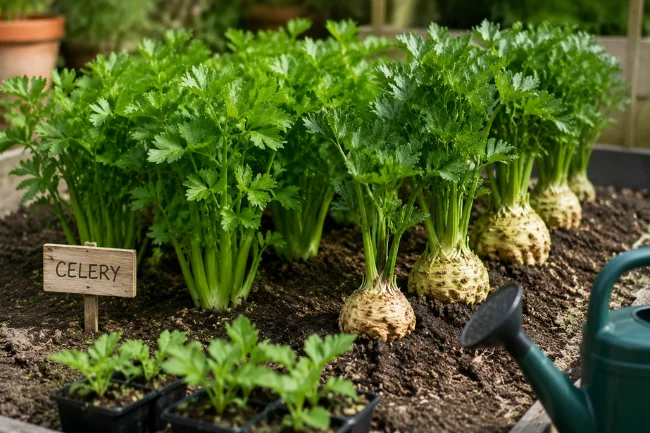
The familiar celery sold in U.S. grocery stores is usually grown mainly for its long, crisp stalks. Other forms of Apium graveolens can be grown for their leaves or enlarged edible base.
This explains why one celery plant may appear as a bunch of long green stalks while another may have a large, rough, rounded base.
It is therefore inaccurate to say that pravi celer always means one special variety that is completely different from ordinary celery.
It is also too broad to say that pravi celer always means celeriac.
A better interpretation is that pravi celer is a regional name associated with true or cultivated celery, with the exact plant form depending on the context.
This distinction makes the term much easier to understand and prevents some of the exaggerated claims that appear online.
The Botanical Background of Pravi Celer
Pravi celer is associated with Apium graveolens, a member of the Apiaceae family.
The Apiaceae family is sometimes called the carrot family because it includes carrots, but it also contains familiar herbs and vegetables such as parsley, fennel, dill, and coriander.
Celery is an aromatic herbaceous plant. It can complete its life cycle over two growing seasons, although its behavior can vary with growing conditions and cultivation.
The plant has divided leaves, aromatic stems, flowers arranged in umbrella-shaped clusters, and small fruits commonly referred to as celery seeds.
Wild and cultivated forms have a long history of human use. Over time, growers selected plants with characteristics that were useful for food production.
Some cultivated forms became valued for thick stalks. Others became valued for aromatic foliage or an enlarged edible base.
This history helps explain why the word celery can describe several different culinary forms today.
Rather than treating these forms as unrelated plants, it is more accurate to see them as different expressions of a species that has been shaped by cultivation.
The Different Parts of Pravi Celer
One of the most useful ways to understand pravi celer is to look at the plant as a whole.
Also Read: Brand Name Normalization Rules: A Complete Guide
Depending on the cultivated form and the food tradition, people can use several parts of celery.
These include:
- Stalks
- Leaves
- Seeds
- Enlarged edible base or celeriac
Each part has a different texture and flavor.
Stalk celery is crisp and juicy. Celery leaves are more strongly aromatic. Celery seeds have a concentrated flavor and are usually used as a seasoning. Celeriac has a firm, dense texture and a mild celery-like flavor.
Not every celery plant will have all of these parts developed to the same culinary standard. Cultivated varieties are selected for different purposes.
This is why identifying the particular form is more useful than assuming that every celery plant is identical.
Celery Stalks and Their Uses
Celery stalks are probably the most familiar part of the plant in the United States.
They are crisp, watery, and mildly aromatic. Their texture makes them useful in both raw and cooked foods.
Raw celery can be sliced into salads, served with dips, added to vegetable trays, or eaten as a simple snack.
Cooked celery is even more versatile.
It can be chopped and added to soups, stews, sauces, casseroles, stuffing, and stocks. It is often cooked with onions and carrots to create a flavorful base for many dishes.
Celery does not always need to be the main ingredient. In fact, its greatest culinary value often comes from the way it supports other ingredients.
A small amount of chopped celery can add aroma, texture, and depth to a dish without dominating the overall flavor.
For U.S. home cooks, this makes celery an inexpensive and practical ingredient to keep in the refrigerator.
Celery Leaves as a Flavorful Herb
Celery leaves deserve more attention than they usually receive.
They have a stronger celery flavor than the stalks and can be used to add aroma to many dishes.
Fresh leaves can be chopped into soups, salads, sauces, rice dishes, vegetable recipes, and other savory meals.
They can also be used as a garnish.
The stronger flavor means that you often need only a small amount.
Using the leaves is also a simple way to reduce food waste. When people buy a bunch of celery, they sometimes remove the leaves and throw them away. If the leaves are fresh and properly washed, there is usually no culinary reason to discard them.
In traditional cooking, strongly flavored leafy parts can be especially valuable because they provide a concentrated celery aroma without requiring a large amount of the plant.
Celery Root and Why It Is Different
Celery root, commonly called celeriac, is one of the most interesting forms associated with celery.
Unlike stalk celery, celeriac is grown mainly for its enlarged edible base.
Its exterior is rough, brownish, and knobby. At first glance, it may not look much like the clean green stalks found in American supermarkets.
After the thick outer skin is removed, the inside is pale and firm.
Celeriac has a mild celery flavor with earthy notes. It can be roasted, boiled, mashed, grated, or added to soups and stews.
It can also be combined with potatoes or other root vegetables.
This difference is important because celeriac is not simply another name for a bunch of stalk celery. It is a particular cultivated form of Apium graveolens that has been selected for its enlarged edible base.
That is why recipes calling for celery root require a different ingredient from recipes that call for ordinary celery stalks.
Celery Seeds and Their Traditional Uses
Celery seeds are much smaller than the other edible parts, but their flavor is much more concentrated.
They are generally used as a spice rather than eaten in large amounts.
Celery seeds can be used in pickling, soups, sauces, salad dressings, spice mixtures, and other savory foods.
Their flavor is aromatic, slightly bitter, and strongly celery-like.
Celery seeds have also been used in traditional herbal practices. However, it is important to separate traditional use from modern medical evidence.
A seasoning used in a recipe is not the same as a concentrated celery-seed extract or supplement.
This difference matters because concentrated herbal products can behave differently from normal foods.
If you are interested in celery seeds for culinary purposes, using them as a seasoning is the simplest approach.
If you are considering concentrated supplements, it is better to speak with a qualified healthcare professional, especially if you take medication or have a medical condition.
What Does Pravi Celer Taste Like?
The flavor of pravi celer depends on which part of the plant you are eating.
Stalk celery is crisp, fresh, watery, and mildly aromatic.
Celery leaves have a stronger and more concentrated flavor. They can taste more like an herb than a vegetable.
Celeriac has a denser texture and an earthy celery flavor. It is especially good in cooked dishes where its firmness and aroma can develop.
Celery seeds have the most concentrated flavor of these common forms. A small amount can noticeably change the taste of a dish.
This range of flavors is one reason celery is useful in cooking.
You can use stalks when you want crunch, leaves when you want fresh aroma, celeriac when you want a substantial vegetable, and seeds when you want concentrated seasoning.
Nutritional Value of Pravi Celer
Celery is a low-calorie vegetable that can contribute water, dietary fiber, vitamins, and minerals to a balanced diet.
The exact nutritional content varies depending on the part of the plant, serving size, and preparation method.
Fresh stalk celery contains a high amount of water and provides dietary fiber along with nutrients such as vitamin K, vitamin C, folate, and potassium in smaller amounts.
Celeriac is denser than stalk celery and contains more carbohydrate because the enlarged base functions as a storage organ.
Celery leaves can also contribute nutrients and plant compounds, although people generally eat them in smaller quantities.
Celery seeds are normally consumed in tiny amounts, so they should not be treated as a major source of everyday nutrition.
The bigger picture is more important than any single nutrient.
Celery can contribute to a varied diet, but it should be eaten alongside many other vegetables, fruits, whole grains, legumes, nuts, seeds, and other nutritious foods.
No single vegetable needs to carry the entire nutritional burden of a healthy diet.
Traditional Uses of Pravi Celer
Celery has a long history of human use as both food and a traditional plant.
Different cultures have used celery in cooking, seasoning, and traditional herbal practices.
Its strong aroma made it useful for flavoring broths, soups, sauces, and other savory foods.
In traditional cooking, using several parts of the plant could also make practical sense. Leaves provide strong flavor, stalks provide texture, and roots or seeds can be used in different preparations.
However, historical use should not automatically be interpreted as medical proof.
A plant can have a long history of traditional use without every traditional health claim being confirmed by modern clinical research.
For a trustworthy understanding of pravi celer, it is better to appreciate its cultural history while keeping health claims within the limits of scientific evidence.
Pravi Celer in Everyday Cooking
You do not need complicated recipes to use pravi celer.
The stalks can be sliced and added to salads.
Chopped celery can be cooked with onions and carrots before adding broth, beans, meat, or vegetables.
Celery leaves can be added near the end of cooking when you want a fresh herbal flavor.
Celeriac can be roasted or mashed.
Celery seeds can be used carefully as a seasoning.
One practical advantage is that celery can work in both raw and cooked recipes.
For example, raw celery provides crunch in a salad, while slowly cooked celery becomes softer and adds aroma to soup.
It also pairs well with many common ingredients, including chicken, turkey, potatoes, carrots, onions, beans, lentils, apples, nuts, and various herbs.
This flexibility makes celery easy to include in an everyday American diet.
How to Prepare Pravi Celer
Preparation depends on the part of the plant.
For celery stalks, rinse them thoroughly under clean running water. Remove damaged sections and cut the stalks according to the recipe.
Celery leaves should also be washed well, particularly when dirt or other debris is present around the stems.
Celeriac requires more preparation because of its rough exterior.
First, wash the root. Then remove the outer skin with a sturdy peeler or knife. Because the root can be irregular and firm, use care while cutting it.
Once peeled, the inside can be sliced, diced, grated, roasted, boiled, or added to soups.
Celery seeds usually need no special preparation when used as a spice.
Good food-handling practices are important for all fresh produce. Clean hands, knives, cutting boards, and storage containers help reduce the risk of food contamination.
How to Store Pravi Celer
Fresh stalk celery should generally be kept refrigerated.
Also Read:Backtofrontshow Pricing: Complete Cost and Features Comparison
Proper refrigeration helps preserve its crisp texture and freshness.
If celery becomes slightly limp, it may still be suitable for cooking, although the texture may not be as pleasant when eaten raw.
Celery leaves can lose freshness faster than the thicker stalks, so using them sooner is often a good idea.
Celeriac can also be stored in the refrigerator. Its dense structure allows it to remain useful longer than delicate leafy vegetables when stored properly.
If you have extra celery, consider using it in soup, stock, stuffing, sauces, or cooked vegetable dishes rather than allowing it to spoil.
Using the whole plant where practical can reduce household food waste.
Pravi Celer vs. Celeriac
Pravi celer and celeriac should not automatically be treated as identical terms.
Celeriac is a specific cultivated form of Apium graveolens that is grown mainly for its enlarged edible base.
Stalk celery is cultivated mainly for its long, crisp leaf stalks.
Both are connected to the same celery species, but they have very different appearances and culinary uses.
Stalk celery is usually green, long, and crunchy.
Celeriac is round, rough, pale inside, and much denser.
The flavor also differs.
Stalk celery has a fresh and watery character, while celeriac has a deeper, earthier celery flavor.
This distinction is especially useful when reading Balkan or European recipes. If a recipe refers to celery root, replacing it with a few celery stalks may change the texture and flavor significantly.
Is Pravi Celer the Same as Wild Celery?
The phrase pravi celer should not be used as a reason to assume that every wild plant resembling celery is safe to eat.
The Apiaceae family contains many plants with similar appearances, and some wild relatives can be dangerous.
The botanical species Apium graveolens is associated with celery, but wild plants should never be identified for eating based only on a photograph, common name, or general resemblance.
This is particularly important for people who forage.
If you are not completely certain about a wild plant’s identity, do not consume it.
For most home cooks, there is no reason to take this risk. Cultivated celery from a reliable food source is much easier to identify and use safely.
The terms “wild celery” and “celery” can also refer to different plants depending on the region, so botanical names are more reliable than common names when accurate identification matters.
Who Should Be Careful With Celery Products?
Most people can enjoy celery as a normal food without problems.
However, celery can cause allergic reactions in some people.
Anyone with a known celery allergy should avoid celery and foods containing it according to their healthcare provider’s advice.
Extra caution is also appropriate with concentrated celery products, including extracts and supplements.
A normal serving of celery is a food. A concentrated extract is a different type of product and may contain much higher amounts of particular compounds.
People who are pregnant, taking prescription medication, managing a chronic health condition, or considering an herbal supplement should ask a healthcare professional before using concentrated celery products.
This is especially important because internet articles sometimes make traditional herbal products sound completely harmless simply because the original plant is edible.
Food safety and supplement safety are not always the same thing.
How to Choose Good Fresh Celery
When shopping for stalk celery in the United States, look for stalks that appear firm and fresh.
They should not be extremely limp or show extensive damage.
The leaves should look reasonably fresh rather than severely wilted.
For celery root, choose a firm root without major soft or rotten areas.
If you are purchasing a product specifically labeled pravi celer, check what the product actually contains.
Look for the plant name and the specific plant part.
If the product is an herbal supplement, check whether it contains celery seed, celery extract, or another concentrated ingredient.
This simple step can prevent confusion between a fresh vegetable and a concentrated herbal product.
When buying unfamiliar produce, the label, botanical information, and intended culinary use are more reliable than marketing language.
How Pravi Celer Fits Into a Healthy US Diet
For people in the United States, pravi celer does not need to be treated as a special or exotic health product.
It can simply be part of a varied diet.
Fresh celery works well as a low-calorie snack.
It can be added to salads, soups, stews, casseroles, sauces, and stuffing.
Celery leaves can add flavor without requiring large amounts of salt or heavy sauces.
Celeriac can provide another vegetable option for people who want to try something different from potatoes.
The key is variety.
A healthy eating pattern includes many types of vegetables and other nutrient-rich foods. Celery can contribute to that pattern, but there is no need to eat it every day or rely on it for a particular health outcome.
Its greatest value may be its versatility.
It can add flavor, texture, aroma, and variety to ordinary meals without requiring complicated preparation.
Common Misunderstandings About Pravi Celer
One common misunderstanding is that pravi celer is always a completely different plant from regular celery.
It is more accurate to connect the term with Apium graveolens and then consider the particular cultivated form or regional context.
Another misunderstanding is that pravi celer always means celeriac.
Celeriac is an important cultivated form of celery, but the two terms should not automatically be treated as exact synonyms in every context.
A third misunderstanding is that supermarket celery is somehow artificial or inferior simply because it has been bred for thick stalks.
Modern vegetables are commonly selected for particular traits. That does not make them fake.
Another problem is exaggerated health language.
Celery can be nutritious without being a miracle food.
Eating celery does not automatically detox the body, cure disease, or replace medical treatment.
Finally, traditional use should not be confused with scientific proof.
The history of celery is interesting and valuable, but modern health claims should be evaluated using appropriate scientific evidence.
The Whole-Plant Value of Pravi Celer
The idea of using celery more completely is one of the most practical lessons behind the term pravi celer.
Modern supermarkets often present vegetables in a highly standardized form.
With celery, this usually means neatly trimmed stalks.
But celery can offer much more.
Leaves can provide a strong herbal flavor.
Stalks can provide crunch and aromatic depth.
Celeriac can become a substantial cooked vegetable.
Seeds can provide concentrated seasoning.
Using more of the edible plant can make cooking more interesting and can help reduce unnecessary food waste.
It also encourages a better understanding of vegetables.
Instead of asking only, “What is this vegetable supposed to look like?” it is often more useful to ask, “Which part is this variety grown for, and how is that part traditionally used?”
That question can help explain why celery looks so different across markets and recipes.
Also Read:Harouxinn: Meaning, Origin, Uses, Online Identity, and What We Know
Frequently Asked Questions About Pravi Celer
What is pravi celer called in English?
Pravi celer can be translated roughly as “true celery” or “real celery.” It is a regional name associated with celery, particularly in South Slavic language contexts.
What is the scientific name of pravi celer?
The celery plant associated with pravi celer is Apium graveolens. It belongs to the Apiaceae family, which also includes plants such as carrots and parsley.
Is pravi celer a separate species?
No. Pravi celer is not the scientific name of a separate celery species. It is a common or regional name associated with Apium graveolens.
Is pravi celer the same as supermarket celery?
It can refer to celery generally, but the exact form may vary. Supermarket celery is commonly selected for thick stalks, while other cultivated forms can be grown for leaves or an enlarged edible base.
Is celeriac a type of celery?
Yes. Celeriac is a cultivated form of Apium graveolens grown mainly for its enlarged edible base. It has a different appearance and cooking use from ordinary stalk celery.
Conclusion
Pravi celer is a useful term to understand because it connects language, botany, traditional food culture, and modern cooking.
The phrase generally relates to “true” or “real” celery and is associated with Apium graveolens. It should not be treated as the name of a completely separate vegetable species. Botanical and regional sources show that pravi celer is used as a common name for celery, while different cultivated forms of the species can be grown for stalks, leaves, or the enlarged base known as celeriac.
The simplest way to understand pravi celer is to think beyond the standard bunch of green stalks found in the produce aisle. Celery can be used in several forms, and each part offers something different in the kitchen.
Stalks provide crispness, leaves provide strong aroma, seeds provide concentrated seasoning, and celeriac provides a firm, earthy vegetable for cooking.
Celery can also contribute water, fiber, and several nutrients to a balanced diet. At the same time, it is important to avoid exaggerated claims that turn an ordinary vegetable into a miracle treatment.
The most useful way to appreciate pravi celer is therefore simple: understand what the term means, identify the specific celery form you are dealing with, use the edible parts creatively, and view celery as one nutritious and versatile part of a varied diet.